
AUTOMATION OF ELECTRODE AND WELDING POWDER DRYING FURNACES1>
Miroslav Duspara, Antun Stoić, Marko Dunđer, Ivan Samardžić, Mato Sigurnjak
Keywords: electrode drying, temperature controller, welding powder, electrode drying oven
p>ABSTRACT:/strong>
The paper describes errors that can occur during welding due to the presence of hydrogen (moisture). To avoid them, we must take care of electrodes and welding powder. Proper storage is one of the prerequisites for avoiding moisture. Before using the electrode and the welding powder, dry it to prevent the influence of moisture on the welds. We use various ovens and dryers for drying. The paper describes some models of dryers and drying ovens with technical characteristics.
1. WHY DRY ELECTRODES AND WELDING POWDERtrong>
Electrodes and welding powder are dried to avoid various types of errors that may occur during welding. Errors can occur due to improper handling by the operator, poor preparation of welding joints, and due to the presence of hydrogen (moisture) in additional materials and at the welding site.
2. TRAINING OF WELDERS/strong>
POROSITY:
- Improper work technique
- Inadequate arc length
- Improper termination and continuation of welding
- Wet coating of the electrode/li>
- Air flow
- INSUFFICIENT PENETRATION AND ADHESIVEIVAN
- Lead the electrode too quicklybr />- Too little current
- Blowing an electric arc/li>
SLAG INCLUDES:/p>
- Poor cleaning between layers
- Irregular and excessive swinging of the electrode
- BAD WELD GEOMETRY:br />- Inadequate work technique
- Bad parameters/li>
In order to ensure a high-quality weld, and to avoid some of the mentioned errors, we approach the drying of electrodes and welding powder.
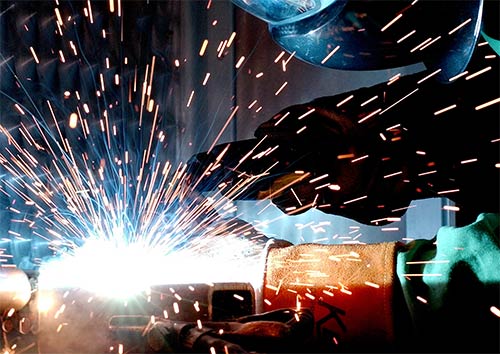
Figure 1. WELDING
Their proper storage plays a major role in the protection of electrodes and welding powder, which is also one of the prerequisites for quality additional material.>
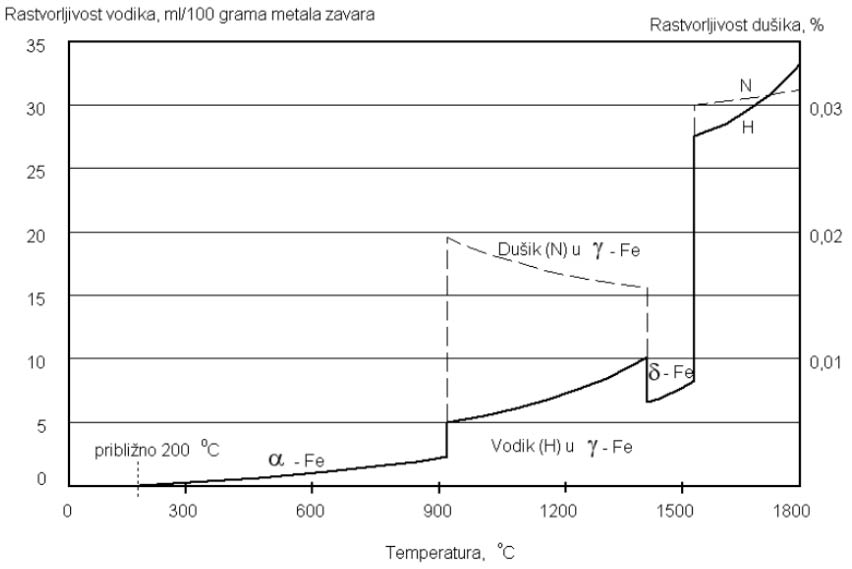
The presence of hydrogen (moisture) is one of the mistakes we avoid by drying electrodes and welding powder. Hydrogen sometimes remains trapped in the welded joint, it does not cause cracks, but so-called cracks can be observed on the surface of the fracture. "fish eyes" and "flakes"
rc="https://www.sigmat.hr/img/cms/strucni-clanci/pogreska-zavarivanje-zarobljeni-vodiku-zava.jpg" alt="" width="417" height="310" />
Figure 2. Error during welding – trapped hydrogen in the weldm>
3. SOLUBILITY DIAGRAM OF HYDROGEN AND NITROGEN IN PURE IRON>
4. BASIC PRAVILA IN HANDLING ELECTRODES
- Electrodes must not be thrown during transfer and transport
- They must be stored in a dry room that needs to be heated, so that the internal temperature is always higher than the external.i>
- Electrodes well sealed from air and stored in a polyethylene bag or can should not be dried before use, all others should, especially when welding constructions that require a high class of joint quality.>
- If welding is done in a humid area, the electrodes should be kept in a dry place.
- Basic electrodes that are longer than 4 hours in an open box are considered wet.i>
- Wet electrodes can be recognized by the sound of one electrode hitting another: (dry = sharp sound and high pitched sound, wet = deep sound)i>
- During welding, small explosions and crackling are heard, and the moisture evaporates in the form of white steam/li>
- The electrode must not be handled with greasy gloves (grease causes porosity in the welded joint)/li>
- If the electrodes are very old, small white crystals can be noticed on the surface of the coating./li>
5. DRYING THE ELECTRODE AND WELDING POWDER
- Electrode drying is carried out in special drying ovens with the possibility of regulating the drying temperature according to the manufacturer's recommendations
- Before use, the electrodes are dried in ovens at temperatures from 250⁰C to 350⁰C
- At the workplace, the welder should also have a quiver for guarding the electrode, and store electrodes at temperatures of 60⁰C -100⁰C. In this way, the electrode cannot get wet during operation.l>
6. AUTOMATIC TEMPERATURE CONTROL
For automatic temperature control, the MaxWeel temperature controller is used, which contains 32 program segments, the so-called "Ramp and soak" keeping a certain temperature for a set time and heating / cooling to the next set temperature.
img src="https://www.sigmat.hr/img/cms/strucni-clanci/temperaturni-kontroler-max-well.jpg" alt="" width="579" height="431" />
Figure 5. MaxWell temperature controller
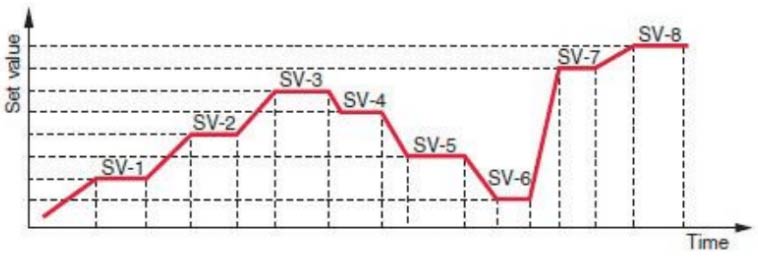
Figure 6. The first eight segments of the temperature program
A K temperature sensor up to 400 ̊C is connected to the input of the controller, while a three-phase relay is connected to the output, which controls the 1200 W heaters.>
7. DRYING QUIVES ELECTRODE PRESERVATION
We use portable furnaces for storing welding electrodes. quivers.>
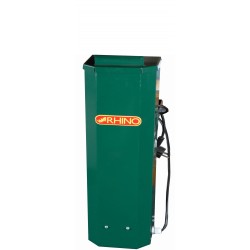
Quiver for drying electrodes TS1/160 TS1L/160
Quiver dimensions: TS1 - 155x210x600 mm
TS1L - 155x210x800 mm
Bowl dimensions: TS1 - 40x50x300 mm (without handle)
TS1L - 40x50x500 mm (without handle)
Regulation: without regulation
Connection: 220V
Design: outer casing plasticized, interior and container INOX
Manipulation: handle for transfer and leaning
Bulb to display the operation of the heater
For electrodes 2.5 mm; 3.25 mm
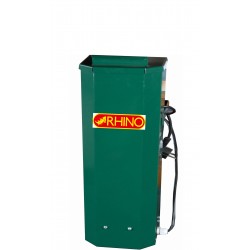
Quiver for drying electrodes TS2/160 TS2L/160
Quiver dimensions: TS2 - 315x300x750 mm
TS2L - 315x300x950 mm
Bowl dimensions: TS2 - 80x80x300 mm (without handle)
TS2L - 80x80x500 mm (without handle)
Regulation: without regulation
Connection: 220V
Design: outer case plasticized, interior and container INOX
Manipulation: handle for transfer and leaning
Lamp for displaying the operation of the heater
For electrodes 2.5 mm; 3.25 mm
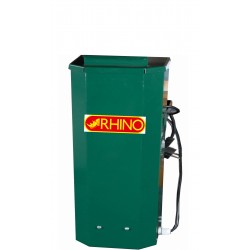
Quiver for drying electrodes TS4/160 TS4L/160
Quiver dimensions: TS4 - 340x340x730 mm
TS4L - 340x340x930 mm
Bowl dimensions: TS4 - 120x120x300 mm (without handle)
TS4L - 120x120x500 mm (without handle)
Regulation: without regulation
Connection: 220V
Design: outer case plasticized, interior and container INOX
Manipulation: handle for transfer and leaning
Lamp for displaying the operation of the heater
For electrodes 2.5 mm; 3.25 mm
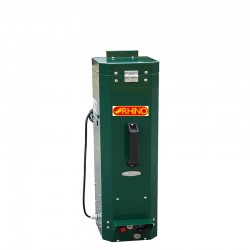
Quiver for drying electrodes TS1/350 TS1L/350
Quiver dimensions: TS1 - 220x280x750 mm
TS1L - 220x280x950 mm
Bowl dimensions: TS1 - 80x80x300 mm
TS1L - 80x80x500 mm
Connection: 220V
Design: plasticized outer casing, stainless steel interior and container
Manipulation: handle for carrying and leaning
Light bulb to show the operation of the heater. Temperature regulator
For electrodes 2.5 mm; 3.25mm
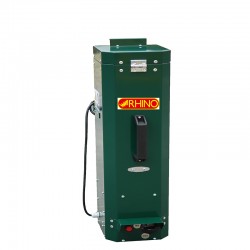
Quiver for drying electrodes TS2/350 TS2L/350
Quiver dimensions: TS2 - 315x300x750mm
TS2L - 315x300x950 mm
Bowl dimensions: TS2 - 80x80x300 mm
TS2L - 80x80x500 mm
Connection: 220V
Execution: outer casing plasticized, interior and container INOX
Manipulation: handle for transfer and leaning
Light bulb to display the operation of the heater. Temperature regulator
For electrodes 2.5 mm; 3.25mm
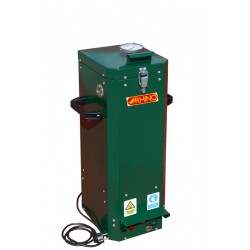
Quiver for drying electrodes TS4/350 TS4L/350
Quiver dimensions: TS4 - 340x340x730 mm
TS4L - 340x340x930 mm
Bowl dimensions: TS4 - 120x120x300 mm
TS4L - 120x120x500 mm
Connection: 220V
Execution : outer casing plasticized, interior and container INOX
Manipulation: handle for carrying and leaning
Light bulb to show the operation of the heater. Temperature regulator
For electrodes 2.5 mm; 3.25mm
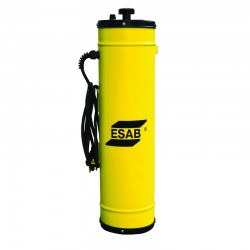
Electrode drying quiver ESAB PSE 5
PSE are light and practical containers for dry storage of electrodes.
It is easy to carry and a manual thermostat with a high temperature range
storage.br />The heating element flows from top to bottom, and the top is completely insulated.
Storage capacity of 5 kg.br />130 ° C preset temperature./p>
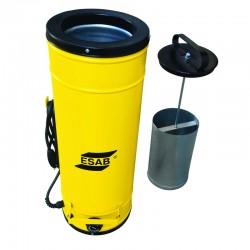
Electrode drying quiver ESAB PSE 10
PSE are light and practical containers for dry storage of electrodes.
It is easy to carry and a manual thermostat with a high temperature range
storage.br />The heating element flows from top to bottom, and the top is completely insulated.
Storage capacity of 10 kg.br />Storage temperature 60-200 ° C.
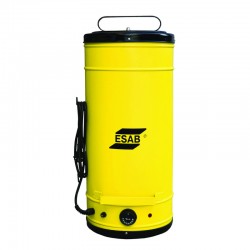
Electrode drying quiver ESAB PSE 24
PSE are light and practical containers for dry storage of electrodes.
It is easy to carry and a manual thermostat with a high temperature range
storage.br />The heating element flows from top to bottom, and the top is completely insulated.
Storage capacity of 24 kg.br />Storage temperature 60-200 ° C.
8. LITERATURE
[1] King S.; Andrić Š.: Fundamentals of welding and related procedures, Faculty of Mechanical Engineering and Shipbuilding, University of Zagreb, 1992.
[2] Sigmat company
