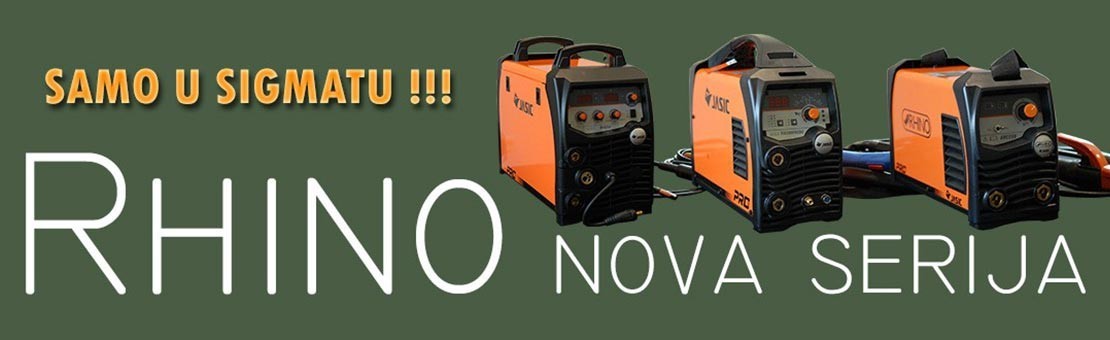

TIG equipment
TIG welding or electric arc welding with a non-fusible electrode in inert gas protection (GTAW) is a manual welding process in a neutral shielding gas or a neutral mixture of gases, which uses a non-fusible tungsten electrode and special additional material. The property of this procedure is a stable electric arc and a high-quality weld, but it requires exceptional skills of the welder. Although it can be used for almost all types of materials, it is most commonly used for welding stainless steels and light metals. Suitable for welding thin sheets (up to 6 mm thick), and is often used in the production of bicycles, aircraft and ships, and in welding in forced positions. As a rule, the tungsten electrode is connected to the (-) pole of the direct current source, due to significantly less wear of the tungsten electrode. Pulsed welding current is used.
-
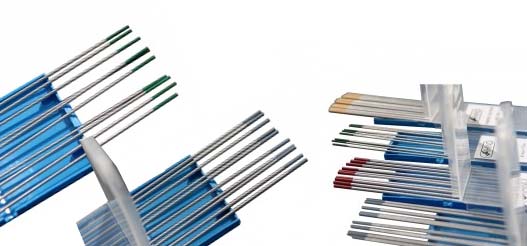
Wolfram electrodes
....
The electric arc is established by means of a high-frequency generator (VF generator), which is switched on only in a fraction of a second, just before welding. After establishing an electric arc between the tungsten electrode and the workpiece, i.e. connections to the poles of the electric current, the VG generator is turned off, and the welding process takes place with or without adding additional material (wire) to the electric arc. This is followed by the melting of the edges of the welding groove, that is, the even manual addition of the welding wire to the electric arc and the melting of the wire and the creation of the welded joint.
List of pages in TIG equipment:
