
Ventilation for industry
On sale are fixed and mobile filter units with accompanying suction arms and ventilation sets.
1. Mobile filter ventilation
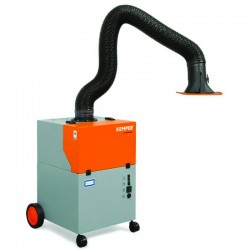
Mobile filter unit SMARTMASTER
Compact basic extraction unit for occasional use during
welding. Basic mobile welding fume extraction unitbr />it is designed for occasional use with small amounts of dust. Rotating />and the swivel exhaust hood allows use in a 360-degree radius
and provides only a few adjustments during welding. Basic device
it is suitable for welding high-alloy steel, thanks to the W3 approval.
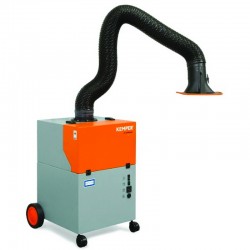
Mobile filter unit SMARTMASTER
Compact basic extraction unit for occasional use during
welding. Basic mobile welding fume extraction unitbr />it is designed for occasional use with small amounts of dust. Rotating />and the swivel exhaust hood allows use in a 360-degree radius
and provides only a few adjustments during welding. Basic device
it is suitable for welding high-alloy steel, thanks to the W3 approval.
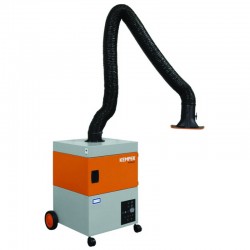
Mobile filter unit PROFIMASTER
Welding of a smoke filter unit in robust quality with a large capacity filter.
Profi Master is a robust smoke filtering unit for occasional and frequent usebr />use with low to medium amounts of dust. />The high-capacity disposable filter is easy to change.br />The rotating and pivoting exhaust hood allows use in a 360 radius />degrees and provides only a few adjustments during welding./p>
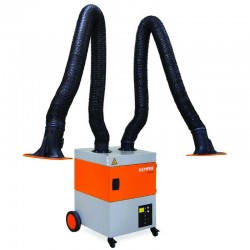
Mobile filter unit PROFIMASTER
Welding of a smoke filter with two exhaust arms in robust quality with a large
capacity filter. The Profi Master is a robust smoke filtering unit for occasional and
frequent use with small to medium amounts of dust. The high-capacity disposable
filter can be easily changed. The design with a double
exhaust arm with integrated silencers allows simultaneous or
alternating action in two places with adjustable suction operation.
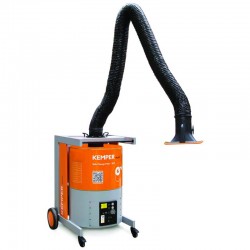
Mobile filter unit MAXIFIL
Extraction unit for welding smoke with a large capacity and safe
filter changes. MaxiFil smoke extraction units combine large filter capacities with
pollution-free filter changes. Due to their high mobility and radius
of 360 degrees, they are ideal for regular use. The comfortable filtered device handles medium smoke and dust applications with
ease.
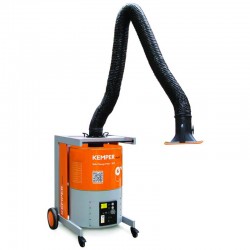
Mobile filter unit MAXIFIL ACTIVE CARBON
Extraction unit with activated carbon filtered carbon and safe change
fi lter. MaxiFil filter devices combine large filter capacities with pollution-free
filter changes. An activated carbon filter absorbs gases and odors. Its
great mobility and 360-degree radius make it an ideal device for continuous
use. Comfortable fi lter The fi lter effortlessly handles applications with medium
amounts of smoke and dust.
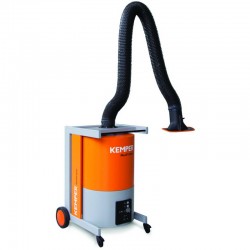
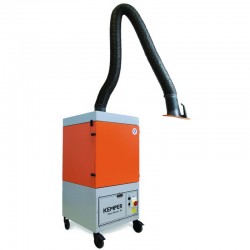
Mobile filter unit MASTER XL
Suction and filter unit for welding fume as basic model with filter that can be cleaned, W3 IFA certificate. Functional filtering unit with a timed, automatic filter cleaning system for high levels of smoke and dust and continuous use. The KemTex® ePTFE membrane filter cartridge for ultra-fine dust particles separates particles even below 0.1 μm. Due to the W3 / IFA certificate, it is also suitable for use in the processing of chrome-nickel steel.
2. Fixed ventilation filter
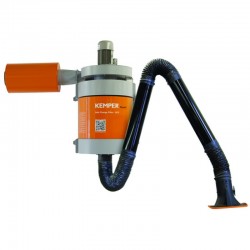
Fixed filter unit
MaxiFil smoke extraction units combine large filter capacities with pollution-free
filter changes. The comfortable filter unit easily handles medium
amounts of smoke and dust. The wall version is also compact and ideal for
regular on-site use
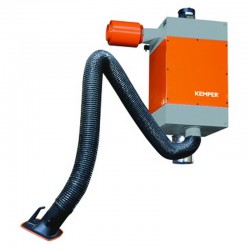
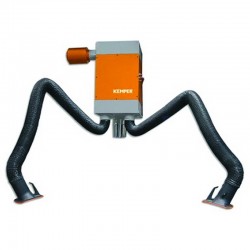
Suction arms and joints:
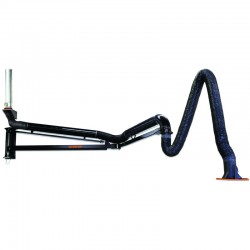
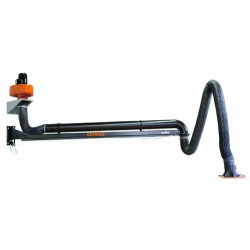
For added ventilation of industrial premises:
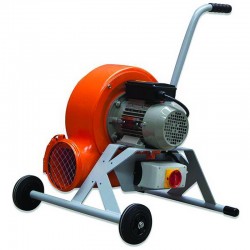
Mobile fan model L
Movable fans for ventilation and removal
Application:
- For high levels of smoke and dustbr />- Non-Stop application
- For ventilation and removal
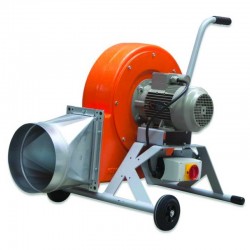
Mobile ventilator model XL
Mobile fans for ventilation and removal
The devices are very quiet and suitable for removing, for example, fumes from welding or car exhaust gases, as well as for ventilation of containers, pipes and narrow working openings.
Application:
- For high levels of smoke and dust
- Non-Stop application
For ventilation and removal
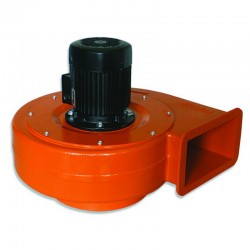
Fan model M
Fans are used in conjunction with the suction unit on KEMPER welding fume extraction tubes, telescopic tubes and suction tubes. They are used for aeration, ventilation and other uses where air filtering is not important. Due to the silumin casing, the fan is particularly quiet and spark-resistant.
Application:
- For suction pipes, telescopic pipes and removal pipes
- For high levels of smoke and dustbr />- For constant use
Advantages
- Very quiet and resistant to sparking due to the silumin casing
Features
- Case and fan made of silumin
- Models with 1000 to 2200 m³/h: connection Ø 160
- Models up to 3000 m³/h: connection Ø 250
Variants
- Different voltages
- Different performance classes/p>
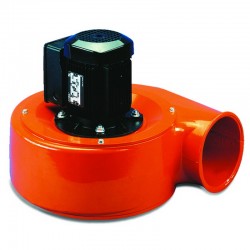
Fan model H
Fans are used in conjunction with the suction unit on KEMPER welding fume extraction tubes, telescopic tubes and suction tubes. They are used for aeration, ventilation and other uses where air filtering is not important. Due to the silumin casing, the fan is particularly quiet and spark-resistant.
Application - For suction pipes, telescopic pipes and removal pipes
- For high levels of smoke and dustbr />- For constant use
Advantages
- Very quiet and resistant to sparking due to the silumin casing
Features
- Case and fan made of silumin
- Models with 1000 to 2200 m³/h: connection Ø 160
- Models up to 3000 m³/h: connection Ø 250
Variants
- Different voltages
- Different performance classes/p>
Ventilation of industrial premises
Mechanical ventilation is a forced exchange of air in a closed space through vertical ducts mechanically driven by fans. Such ventilation is carried out in the period when there is no natural ventilation, i.e. when it is not effective enough. The advantages are that it does not depend on weather conditions, the possibility of regulation, and the system design process is simplified. Disadvantages are high investment costs, high energy consumption, air recirculation and noise.
With suction ventilation, the room is at a pressure lower than the ambient pressure, which prevents the spread of bad air. The fan sucks in the air and blows it out.
Pressure ventilation works in such a way that pressure ventilation devices introduce outside air into the space being ventilated. The room is kept in excess pressure in relation to the neighboring rooms and the environment, thus preventing the inflow of polluted air into the ventilated space. In winter, it is necessary to heat the air that is introduced into the room to approximately room temperature using an air heater. The basic parts of the ventilation chamber are the fan, heater and air filter, as well as the air supply channel.
Pressure and exhaust ventilation is suitable for large rooms. Fresh air is introduced into the room, while used air is expelled outside. It is used for comfort and industrial ventilation.
Natural ventilation implies air exchange in a room without the use of a fan, that is, it uses natural laws for air exchange in a closed room. Air in a closed room is exchanged due to the chimney effect (cause of flow).
The advantages of this type of ventilation are low investment costs, simple maintenance, cheap operating energy, low air flow speed, low noise level and reduction of greenhouse gas emissions. Disadvantages are poor efficiency, poor controllability and dependence on weather conditions.
Infiltration through gaps means the penetration of air through gaps in windows and doors and to a small extent through external walls. The penetration of fresh air into the room through the process of infiltration depends on the size of the gaps in the external windows and doors. The condition for this change is the pressure difference between the indoor and outdoor air as a result of the difference in temperature and energy. This type of ventilation is not sufficient and should be used in combination with opening windows and doors.
Opening windows and doors achieves the most intensive air exchange in the room. It depended on wind speed, the difference between indoor and outdoor air temperatures, the type of windows and blinds, and the arrangement of windows in the building. Most people ventilate their rooms by opening windows, distinguishing between long-term and short-term ventilation. It should be kept in mind that short-term ventilation by fully opening window and balcony doors, especially from the aspect of protection against cold and saving thermal energy for heating, is better than permanent ventilation through half-open door or window sashes. At equal time intervals, for example, every hour, I open the window for 5 to 10 minutes and thereby exchange the entire amount of old air.
Natural ventilation through channels means the exchange of air in a room without windows through vertical masonry ventilation channels that are carried out from the adjoining room to above the roof of the building. It should be borne in mind that this type of ventilation works properly only if a constant supply of fresh air in adequate quantities is ensured. Air is supplied through an opening on the wall or at the bottom of the door leaf, and is taken out of the room through an opening under the ceiling with a connection to the ventilation duct.
